The Skin & Joint Injection ClinicGP-led · Ultrasound-guided · Wirral
Joint Injections in Wirral
Ultrasound-guided injections for arthritis, tendon problems and stubborn joint pain.
GP-led ultrasound-guided procedures
When arthritis, a painful tendon or a stiff joint starts to limit how you move, the right injection can make a real difference once it's chosen after a proper assessment. Our GP-led clinic in Wirral offers ultrasound-guided injections for the knee, shoulder, hand and foot, with steroid, hyaluronic acid, Arthrosamid, Durolane and PRF options matched carefully to your diagnosis.
Ultrasound-guided injections
Knee injection options
Arthritis-focused care
Wirral and Merseyside
Joint pain treatment · Wirral
Joint pain treatment in Wirral
Joint injections can help selected patients with arthritis, inflamed joints, bursitis, tendon sheath problems and some soft-tissue pain conditions. They do not cure every joint problem. They work best when the diagnosis and target are clear.
At Skin & Joint Injection Clinic in Higher Bebington, Wirral, injections sit within a wider musculoskeletal assessment. The clinician considers your history, examination, medication, previous treatment, activity goals and any imaging already available.
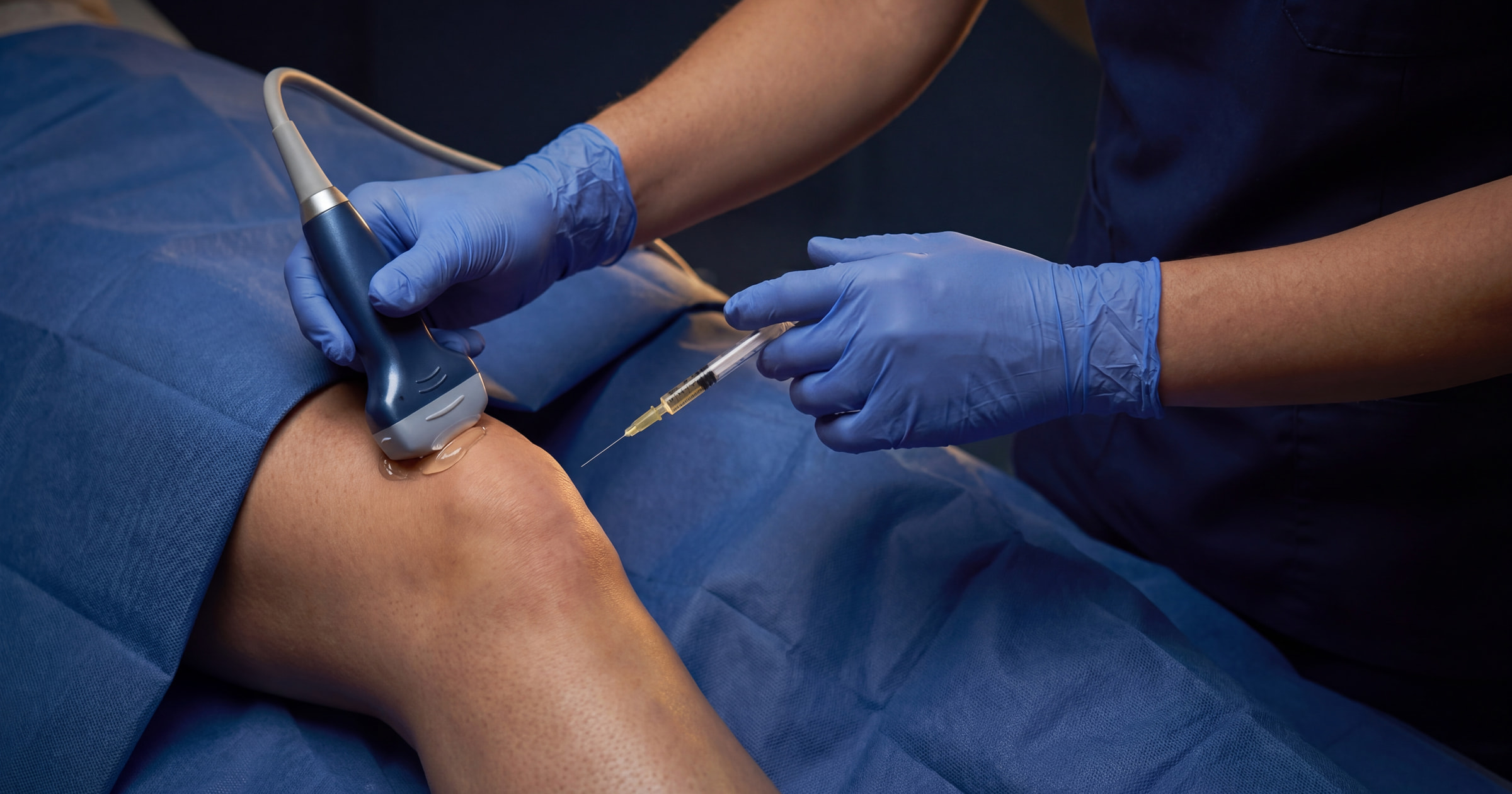
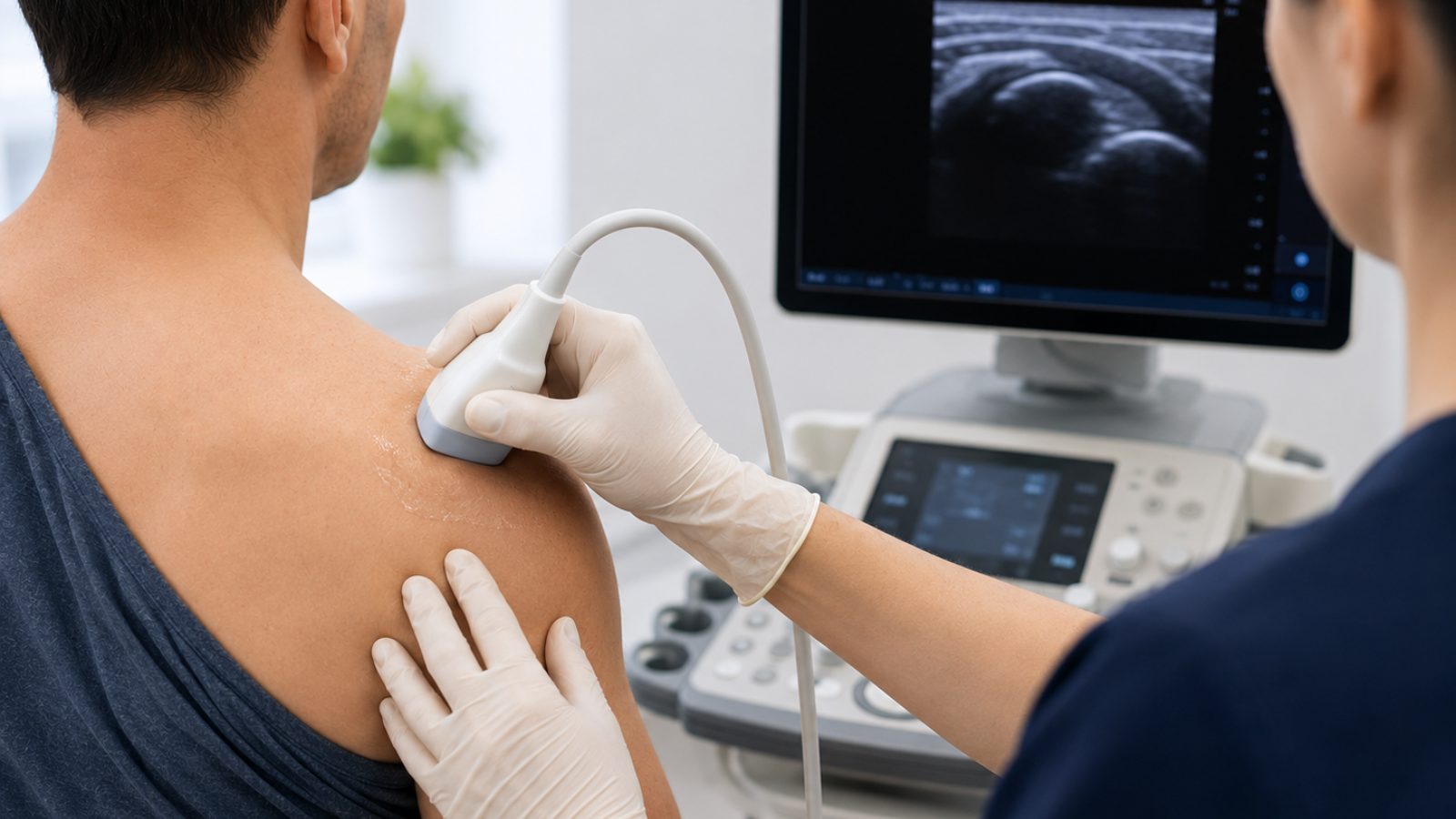
Ultrasound guidance helps the clinician see the relevant anatomy and guide the needle to the target area, rather than relying on landmarks alone.
Ultrasound turns an injection from a landmark-based procedure into a directly visualised one. The clinician sees the joint, tendon sheath or bursa on screen in real time and watches the needle enter the correct space, rather than relying on surface landmarks alone.
Published clinical research consistently shows that ultrasound-guided injections reach the intended target more accurately than landmark-guided ones. For some joints, reported accuracy improvements range from around 50 to 70 percent up to over 95 percent. Accurate placement matters because the medication needs to reach the structure that is actually generating your pain.
It is also a safer procedure. Real-time imaging lets the clinician identify nerves, blood vessels and other sensitive structures, and route around them. For patients, that means less bruising, greater confidence the right area is being treated, and a more reliable response when the diagnosis is clear.
Treatment options
Compare joint injection options
The most suitable injection depends on the condition being treated. Use the summaries below as a starting point before assessment.
Steroid injections
Often used when inflammation is a key driver, such as bursitis, frozen shoulder, trigger finger, plantar fasciitis or an inflamed arthritic joint.
Onset, duration and the most common reasons each injection is chosen. These ranges are conservative summaries — suitability and likely benefit are always confirmed at your consultation.
Sources of these ranges include manufacturer summaries and published clinical reviews; individual response varies. Book a consultation to find out which option is suitable for you.
How treatment selection works
A useful injection plan starts with three questions: which structure hurts, what is driving the pain, and what outcome is realistic. The right option depends on whether inflammation, osteoarthritis, tendon pathology or soft-tissue irritation is the dominant factor.
Steroid
Often used when inflammation is prominent. Can work relatively quickly, but duration varies and repeat use needs caution.
Hyaluronic acid
A non-steroid option often considered for osteoarthritis-related pain and stiffness in suitable joints.
Arthrosamid
Considered for suitable knee osteoarthritis after careful discussion of indications, risks and alternatives.
PRF
Uses a processed sample of your own blood and may be considered for selected soft-tissue or joint problems.
Injection is not always the right answer. Where there is infection, an unclear diagnosis, recent trauma, severe or progressive symptoms, certain medication risks, or a problem better managed with physiotherapy, imaging, surgery or NHS specialist review, we will say so and guide you to the safer route. The clinic does not perform spine, neck, lower back or sacroiliac joint injections.
Serving Wirral, Merseyside and nearby areas
The clinic is based at Higher Bebington Health Centre in Wirral and commonly receives enquiries from Bebington, Birkenhead, Heswall, Liverpool, Chester and the wider Merseyside area. If you are unsure which treatment page to read first, start with your main symptom: knee arthritis, shoulder pain, tendon pain or a previous diagnosis from your GP or physiotherapist.
They are injections performed while the clinician uses ultrasound imaging to visualise the target area. This can help guide placement into or around the intended joint, tendon sheath or bursa.
Which joints can be treated?
Suitability depends on assessment. Common enquiries include knee, shoulder, hand, wrist, elbow, hip-region soft tissue, ankle and foot problems. The clinic does not perform spinal injections.
Which injection is best for knee arthritis?
There is no single best injection for every patient. Steroid, hyaluronic acid, Arthrosamid and PRF have different roles. Choice depends on symptoms, examination, imaging, medical history and treatment goals.
Are results guaranteed?
No. Some patients improve, some improve only partly, and some do not respond. The consultation explains realistic benefits, risks and alternatives before any procedure.
Do I need a referral?
A referral is not usually required for a private consultation. If your symptoms suggest a problem needing urgent NHS assessment or specialist referral, the clinic will advise you accordingly.
Book a joint injection consultation in Wirral
Book a consultation if you want help deciding between steroid, hyaluronic acid, Arthrosamid, Durolane, Ostenil Plus or PRF options for your symptoms.
Assessment, treatment and aftercare, clearly explained.
We know it can feel difficult to book a procedure when you are not sure what will happen next. Your clinician will explain suitability, risks, recovery and aftercare before treatment goes ahead.
Book
Choose a consultation online or speak to the clinic if you are not sure which service fits. Most appointments are available within seven days.
Assess
An in-person review with Dr Mugerwa: he will listen to your story and examine the area, which may include an ultrasound scan. You then get an honest recommendation — if treatment is suitable we explain the options, risks and likely outcomes; if it is not, we will tell you and refer you on.
Treat
The procedure itself, followed by tailored aftercare guidance and a clear contact route if anything changes during recovery.