Reduced pain and swelling
When inflammation is driving the pain, a steroid injection can settle swelling and make the affected joint or tendon feel calmer. The degree and duration of relief vary between patients.
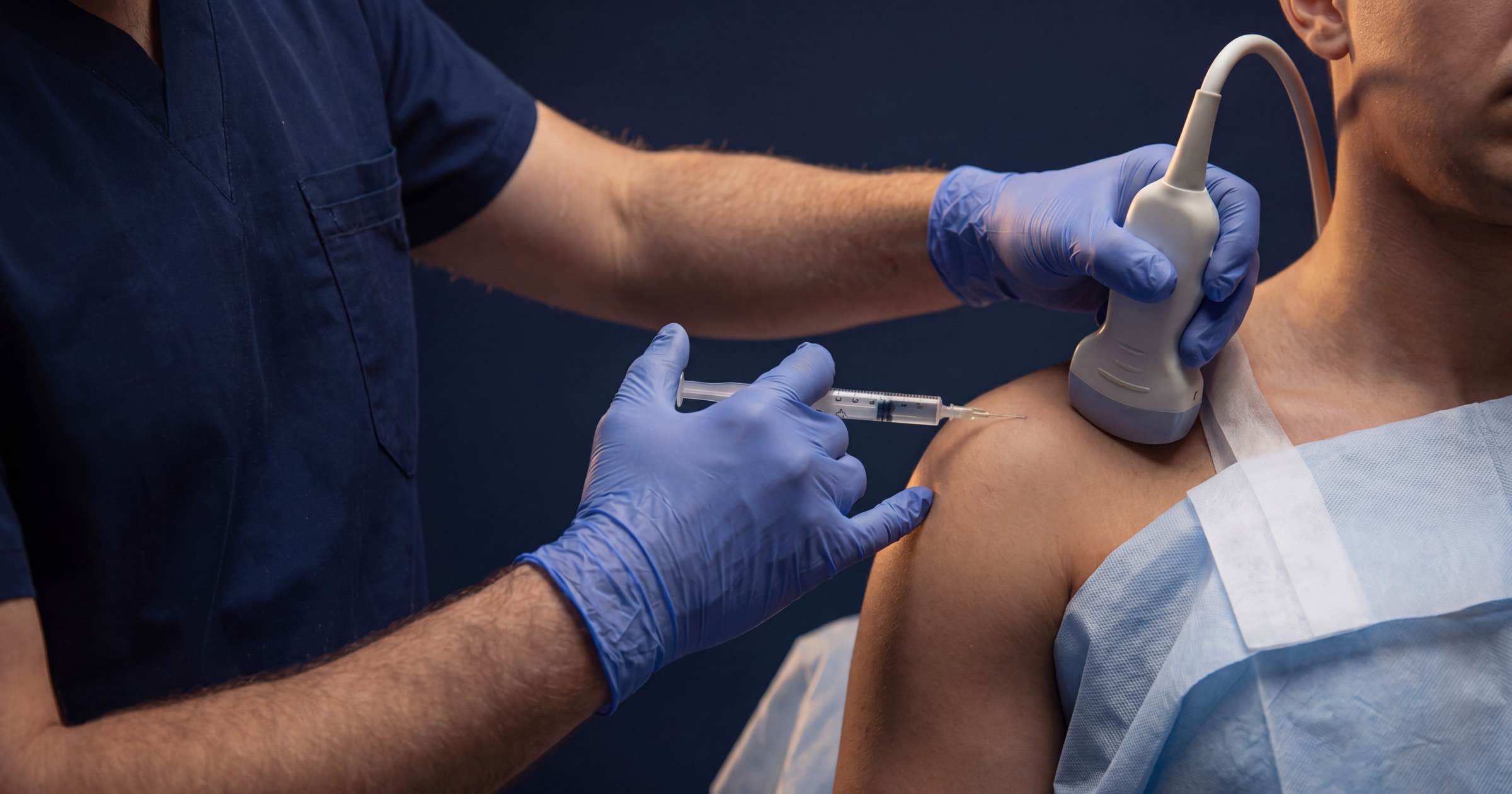
Calming inflammation in selected joints, tendons and bursae after clinical assessment.





Ultrasound-guided steroid injections in Wirral are most often used for frozen shoulder, knee arthritis, trigger finger, plantar fasciitis, bursitis of the hip, shoulder or elbow, rotator cuff tendinopathy, carpal tunnel syndrome and Morton's neuroma. A steroid () injection settles inflammation around a painful joint, tendon sheath or bursa, delivered under ultrasound guidance where appropriate so the clinician can see the target tissue throughout the procedure. For the right diagnosis, it can be one of the fastest, most reliable ways to bring an inflamed joint back under control.
From £200
Includes consultation, the procedure itself, ultrasound guidance where appropriate and aftercare advice. Anterior hip injection is £400.

The injection usually combines a corticosteroid with a small volume of local anaesthetic. The anaesthetic can numb the area briefly, which often gives an early signal that the diagnosis is correct. The steroid then works over the following days to calm the underlying inflammation.
Response varies. Some patients feel clear relief, others notice partial improvement, and some do not respond. Your consultation covers the likely benefits, the risks specific to your situation, and the alternatives (including hyaluronic acid options like Ostenil Plus or Durolane when osteoarthritis is the driver), so you can make a confident decision before any injection.
Steroid injections work best when they sit inside a wider plan. That plan may include physiotherapy, activity changes, weight management, medication review or further imaging. We treat the injection as one step in the recovery, not the whole answer.
Outcomes are individual, but these are the changes patients most often report after a well-targeted ultrasound-guided steroid injection.
When inflammation is driving the pain, a steroid injection can settle swelling and make the affected joint or tendon feel calmer. The degree and duration of relief vary between patients.
As pain eases, movement often feels easier. That window of relief is what we use to support a return to physiotherapy, normal activities and rehabilitation with less guarding.
Some patients notice improvement within a few days; others take one to two weeks. If response is poor, we review the plan rather than simply repeating the same injection.
Suitability is decided after a full musculoskeletal assessment. These are the diagnoses we most frequently see in clinic for an ultrasound-guided steroid injection, with the upper-limb presentations typically more responsive than long-standing weight-bearing osteoarthritis.
A typical appointment takes around 30 minutes. We explain each stage before the procedure so you know what to expect on the day, afterwards, and if symptoms do not settle as hoped.
We review your clinical history, examine the affected joint or soft tissue, look at any previous imaging, and screen for contraindications such as active infection, poorly controlled diabetes or upcoming joint replacement surgery. We confirm that an injection is clinically appropriate before any treatment is offered.
The skin is prepared with sterile antiseptic and the corticosteroid is usually combined with a small amount of local anaesthetic. Most patients describe the injection as a brief pinprick or a sensation of pressure. Ultrasound guidance is used where appropriate to support accurate placement around deeper or more complex targets.
Before you leave, we provide written aftercare advice covering the 48-hour rest rule, managing any short-lived steroid flare with paracetamol, and glucose monitoring if you have diabetes. We agree how and when to review response, and what to do if symptoms change unexpectedly.
“I couldn't have coped the last three years without the cortisone shots in my wrists. They change your life. Also they are expertly administered with ultrasound guidance. Dr Soul is easy to talk to and never rushed. Very reasonably priced for ultrasound guided. I have paid the same amount to have them unguided and they never work as well.”
The questions patients most often ask in clinic — covering safety, expected response, repeat injections and aftercare. Anything not covered here, we'll talk through at your consultation.
To protect the joint cartilage and surrounding soft tissues, we generally limit a single joint to no more than three steroid injections in a rolling twelve-month period, spaced at least several months apart. If pain returns quickly after an injection, repeating it is rarely the right answer — we review the diagnosis, the wider plan and the alternatives before considering another.
Steroid injections are considered safe when performed by qualified clinicians under sterile conditions, and we use ultrasound guidance where appropriate to support accurate placement. Serious complications such as joint infection are uncommon. Minor, well-recognised effects can include a short-lived steroid flare in the first 24–48 hours, temporary changes to blood glucose in diabetic patients, and occasional skin thinning or lightening over superficial injection sites — all of which we discuss with you before treatment.
No. The Skin & Joint Injection Clinic is an independent, CQC-registered private clinic. You can refer yourself by booking directly through the website or by contacting the clinic. All clinical assessment, screening for contraindications and the decision about whether an injection is appropriate are carried out in-house during your consultation.
Onset and duration vary between patients. Some people notice improvement within a few days; others take one to two weeks. When the diagnosis is right and the injection settles the underlying inflammation, the pain-free window often lasts several months — long enough to engage properly with physiotherapy or rehabilitation. If you do not respond as hoped, we review the plan rather than simply repeating the injection.
We generally advise resting the treated joint or area for around 48 hours after the procedure, avoiding heavy or repetitive loading. Most patients can continue with ordinary daily activities. We provide you with written aftercare guidance covering managing any short-lived steroid flare, glucose monitoring if you have diabetes, and when to contact us if symptoms change.
We usually combine the corticosteroid with a small amount of local anaesthetic, which numbs the area within seconds. Most patients describe the injection itself as a brief pinprick or a sensation of pressure. Ultrasound guidance — used where appropriate — helps minimise unnecessary needle movement and supports accurate placement.
In many cases, yes — but it requires careful planning. Corticosteroids can cause a temporary rise in blood glucose for several days after the injection, and we cover this in detail during your consultation. We will assess your current glucose control, agree a monitoring plan and discuss non-steroid alternatives such as hyaluronic acid options where they may be more appropriate.