




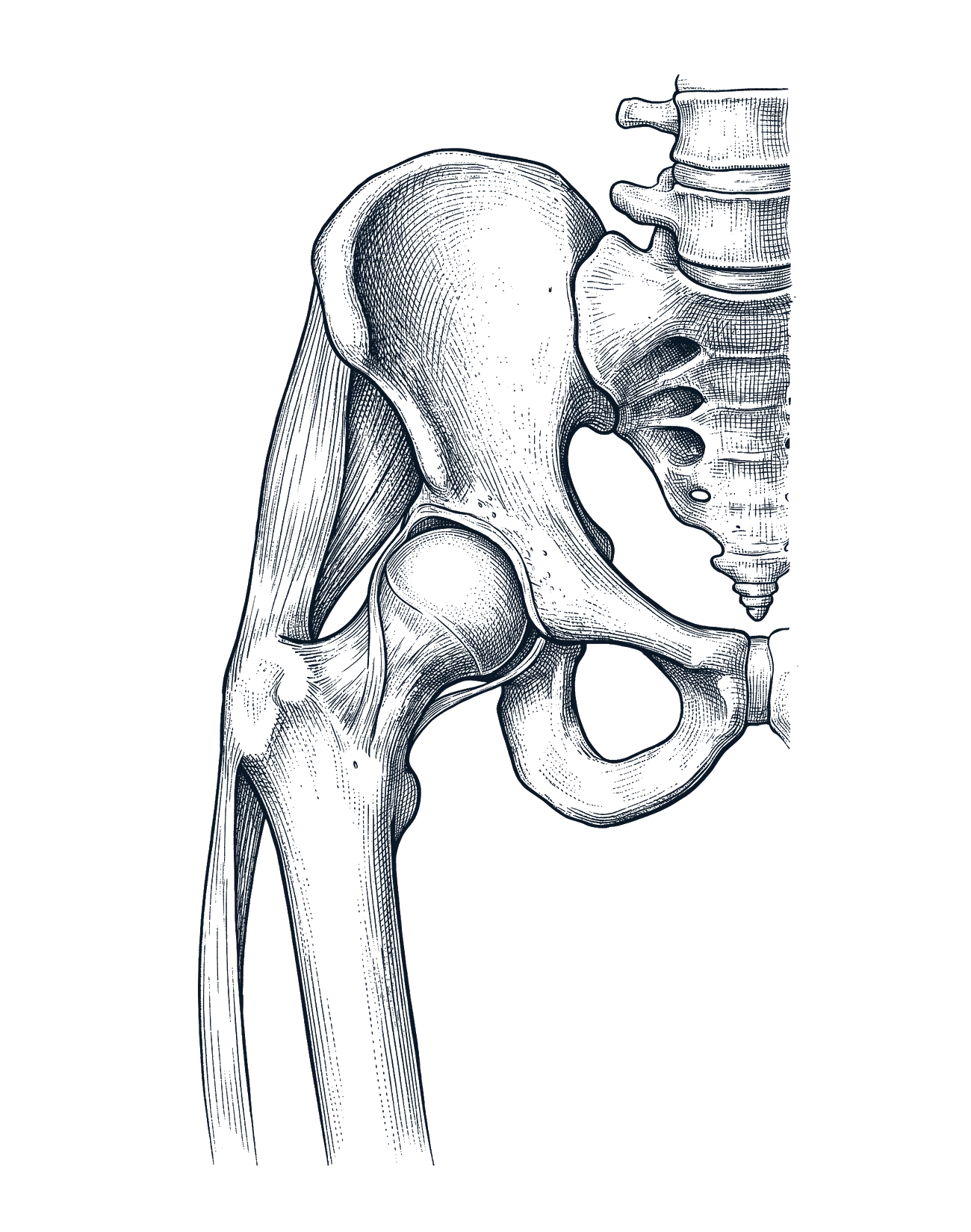
Hip assessment — trochanteric bursitis, hip arthritis, gluteal tendinopathy and referred pain.
Living with hip pain
Start with what's actually hurting, not the treatment name
'Hip pain' covers more ground than most patients realise. Pain in the outer hip, the groin, the buttock and the upper thigh all get filed under the same label — but they have different drivers, different treatments and very different outlooks. Working out which is in play is the most important step.
At the Skin & Joint Injection Clinic in Bebington, Wirral, we assess hip pain in person, with careful examination and ultrasound where it helps. Trochanteric bursitis is far more common than people think; many patients arrive expecting an 'arthritis' answer and leave with a more accurate, more treatable diagnosis.
What might be causing it
The diagnoses we most often see in clinic
These are the patterns of hip pain we most commonly assess. The list isn't diagnostic — your consultation works out which (if any) fits your symptoms.
Trochanteric bursitis (greater trochanteric pain syndrome). Outer-hip pain that makes lying on the affected side painful and disrupts sleep. Common in middle age and often misattributed to 'hip arthritis'.
Hip osteoarthritis. Deep groin or buttock pain that worsens with weight-bearing, restricted hip rotation and difficulty with stairs, socks and getting out of the car.
Gluteal tendinopathy. Outer-hip pain similar to trochanteric bursitis but driven by the tendons themselves rather than bursal inflammation. Common in active women in midlife.
Iliotibial band-related pain. Outer-thigh or lateral knee pain in runners and active patients, often related to gluteal weakness and biomechanical factors.
Referred lumbar spine pain. Pain experienced in the hip but driven by the lower back. We screen for this carefully because the right treatment is different from a true hip problem.
Which injection might suit your hip?
A starting point, not a diagnosis
Patterns of pain matter as much as imaging. Below are the routes we most often discuss for hip problems. Final recommendation always follows in-person assessment.
If your pattern is
Outer-hip pain disturbing sleep, painful to lie on the affected side, no significant groin pain.
Targeted into the trochanteric bursa under ultrasound guidance. Often a turning point in trochanteric pain that hasn't settled with physiotherapy and load management.
Durolane is most commonly used in the knee, but is considered for the hip in selected cases where a cross-linked, longer-acting single shot fits the goals.
An autologous regenerative option for chronic gluteal tendon problems where steroid injection has not helped or repeated injections are not appropriate.
Treatments are considered after clinical assessment. We do not offer or recommend injection therapy without first confirming the diagnosis and screening for contraindications.
Ready to book?
Book an assessment for your hip in Wirral
Our GP-led clinic in Higher Bebington serves patients from across Merseyside — Liverpool, Birkenhead, Heswall and Chester. We assess in person before any treatment is offered, and refer onward when it's the right call.
Assessment, treatment and aftercare, clearly explained.
We know it can feel difficult to book a procedure when you are not sure what will happen next. Your clinician will explain suitability, risks, recovery and aftercare before treatment goes ahead.
Book
Choose a consultation online or speak to the clinic if you are not sure which service fits. Most appointments are available within seven days.
Assess
An in-person review with Dr Mugerwa: he will listen to your story and examine the area, which may include an ultrasound scan. You then get an honest recommendation — if treatment is suitable we explain the options, risks and likely outcomes; if it is not, we will tell you and refer you on.
Treat
The procedure itself, followed by tailored aftercare guidance and a clear contact route if anything changes during recovery.
Frequently asked
Questions we hear about hip pain
The questions patients most often raise in clinic when they're not sure which next step is right.
They feel quite different on careful assessment. Trochanteric bursitis causes outer-hip pain, painful to lie on that side at night, with the hip itself often comfortable to rotate. Hip osteoarthritis causes deeper groin or buttock pain on weight-bearing with restricted internal rotation. Many patients arrive convinced they have 'hip arthritis' when it's actually trochanteric bursitis — which is good news, because it usually responds well to a targeted injection.
This is the classic pattern of trochanteric bursitis or gluteal tendinopathy — both involve structures on the outside of the hip that get compressed when you lie on that side. Sometimes it's worse on the unaffected side too, because the affected hip drops downwards and stretches the inflamed tissue. It's a frequent reason for fragmented sleep and reduced quality of life.
No. For trochanteric bursitis, examination is usually enough to plan a treatment. For hip osteoarthritis, an X-ray is helpful but not always essential. MRI is occasionally needed when the diagnosis is unclear, when there's concern about a femoral neck or labral problem, or when surgery is on the agenda. We discuss imaging case by case rather than ordering it routinely.
Yes. Anterior hip injections are technically more demanding because the joint is deep, surrounded by major neurovascular structures and requires careful ultrasound guidance. The fee reflects the extra time and complexity. Trochanteric bursa, gluteal and lateral hip injections are not affected — they remain at the standard fee.