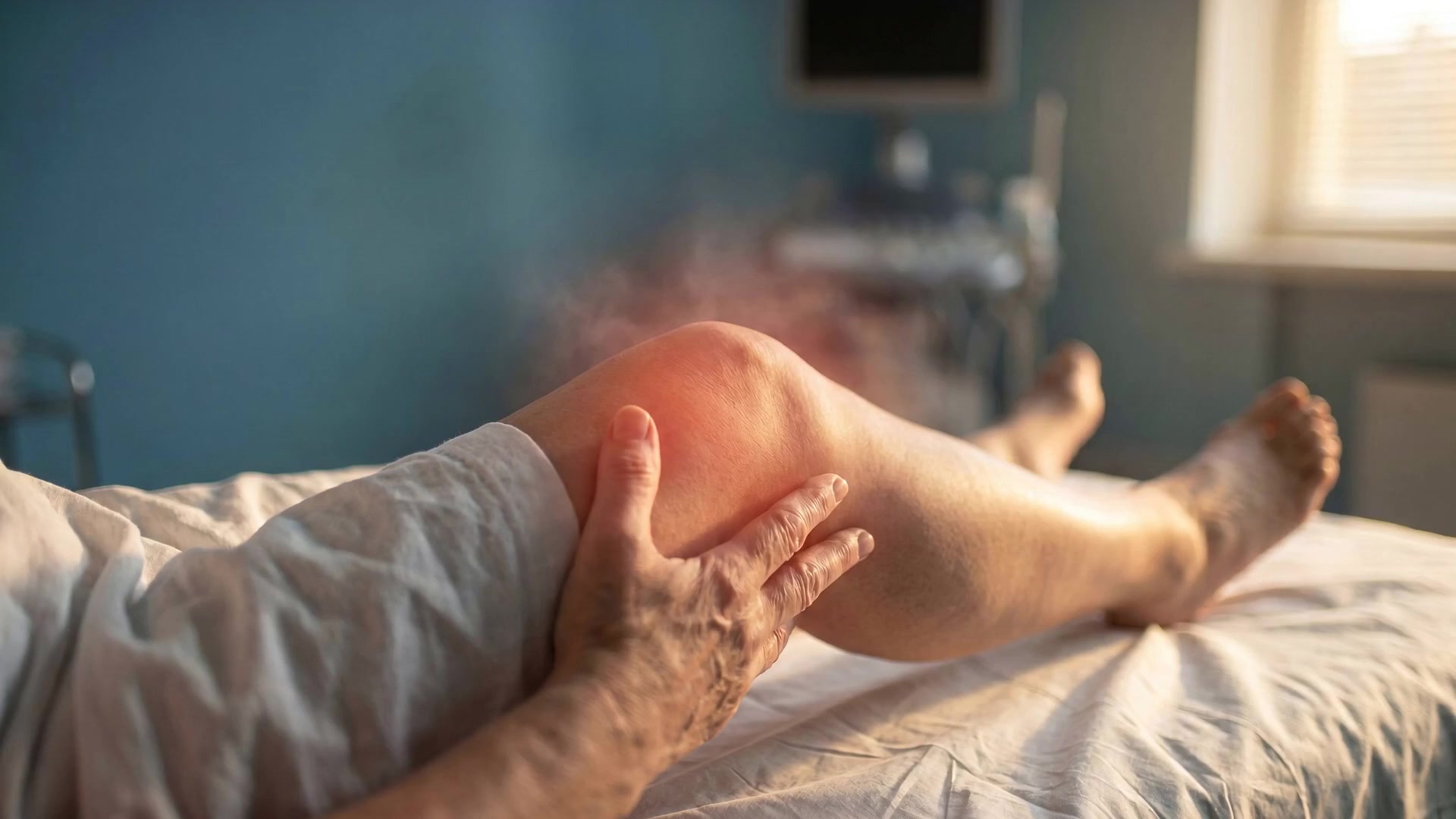
Assessment for knee pain — and the right injection only when it's the right step.
Living with knee pain
Start with what's actually hurting, not the treatment name
Most patients arrive at our clinic knowing they have knee pain rather than which injection they need. That's the sensible place to start. Whether your knee aches on the stairs, swells after a walk, catches when you stand up, or simply hasn't been the same since an old injury, the first job is to understand what's driving it.
At the Skin & Joint Injection Clinic in Bebington, Wirral, we assess knee pain in person before any treatment is offered. Where an injection is the right next step, we'll explain which option fits your knee, what to expect, and what alternatives exist. When non-injection care or onward referral is the better answer, we say so plainly.
What might be causing it
The diagnoses we most often see in clinic
These are the patterns of knee pain we most commonly assess. The list isn't diagnostic — your consultation works out which (if any) fits your symptoms.
Knee osteoarthritis. The most common pattern — deep aching, stiffness on first movement, mechanical grinding and difficulty with stairs, kneeling and prolonged walking.
Anterior knee pain & patellar tendinopathy. Pain at the front of the knee or just below the kneecap, often worse after running, jumping or sitting for long periods.
Meniscus and ligament-related pain. Pain following a twist or injury, often with a sense of catching, locking or instability that has not settled with rest and rehabilitation.
Pes anserine bursitis. Inner-knee pain just below the joint line, more common in middle age and in patients with osteoarthritis or hamstring tightness.
Baker's cyst & related synovitis. Fullness or aching behind the knee, often associated with underlying osteoarthritis or meniscus problems.
Which injection might suit your knee?
A starting point, not a diagnosis
Patterns of pain matter as much as imaging. Below are the routes we most often discuss for knee problems. Final recommendation always follows in-person assessment.
If your pattern is
Acute inflammatory flare — sudden swelling, warmth and severe pain limiting weight-bearing.
Used to settle a clear inflammatory flare so rehabilitation can resume. Effect is variable in duration; we don't repeat indefinitely without reviewing the plan.
A non-steroid viscosupplementation that supports joint lubrication. Suitable for patients with diabetes, and often the first-line non-steroid route discussed.
A cross-linked single-shot hyaluronic acid specifically used for the knee. Considered where convenience and duration of effect matter more than versatility across joints.
A permanent polyacrylamide hydrogel that integrates with the inner joint lining. Considered carefully in selected patients with moderate-to-severe osteoarthritis.
Treatments are considered after clinical assessment. We do not offer or recommend injection therapy without first confirming the diagnosis and screening for contraindications.
Ready to book?
Book an assessment for your knee in Wirral
Our GP-led clinic in Higher Bebington serves patients from across Merseyside — Liverpool, Birkenhead, Heswall and Chester. We assess in person before any treatment is offered, and refer onward when it's the right call.
Assessment, treatment and aftercare, clearly explained.
We know it can feel difficult to book a procedure when you are not sure what will happen next. Your clinician will explain suitability, risks, recovery and aftercare before treatment goes ahead.
Book
Choose a consultation online or speak to the clinic if you are not sure which service fits. Most appointments are available within seven days.
Assess
An in-person review with Dr Mugerwa: he will listen to your story and examine the area, which may include an ultrasound scan. You then get an honest recommendation — if treatment is suitable we explain the options, risks and likely outcomes; if it is not, we will tell you and refer you on.
Treat
The procedure itself, followed by tailored aftercare guidance and a clear contact route if anything changes during recovery.
Frequently asked
Questions we hear about knee pain
The questions patients most often raise in clinic when they're not sure which next step is right.
Not necessarily. Injections are one option among several, including physiotherapy, weight management, footwear adjustment, oral medication review and onward referral. We look at your symptoms, history, examination and any imaging before suggesting whether an injection — and which type — is the right step for you.
Osteoarthritis is a clinical diagnosis supported by examination and sometimes imaging. Typical features include stiffness on first movement, deep aching that worsens with activity, occasional swelling and grinding or catching sensations. Younger patients with sudden symptoms following injury are more likely to have a structural problem such as a meniscus or ligament injury, which is investigated differently.
Often not. For straightforward osteoarthritis, examination and standing X-rays are usually enough to plan an injection. MRI is helpful when a meniscus or ligament problem is suspected, or when the diagnosis is unclear. We discuss whether further imaging is needed at consultation rather than ordering it routinely.
For some patients, yes — at least for a period. Conservative care (exercise, weight management, physiotherapy) remains the foundation. Injection treatments such as Arthrosamid, hyaluronic acid options and PRF can help defer surgery in selected patients with moderate disease. We're direct at consultation about whether non-surgical options are realistic for your particular knee, or whether onward orthopaedic referral is the right path.
Night pain has several possible causes including inflammatory osteoarthritis, bursitis, referred pain from the hip or back, or — less commonly — more serious pathology. Night pain that doesn't ease in any position, that is associated with weight loss or systemic symptoms, or that follows a fall in older adults warrants prompt assessment. We screen for these patterns at consultation.