

Snip excision under local anaesthetic
A short-acting local anaesthetic numbs the area, then the tag is removed at the base with sterile fine scissors. Pressure or a tiny stitch is used to control any minor bleeding.
↻ Tap to replayIn-clinic removal of suitable benign skin tags.
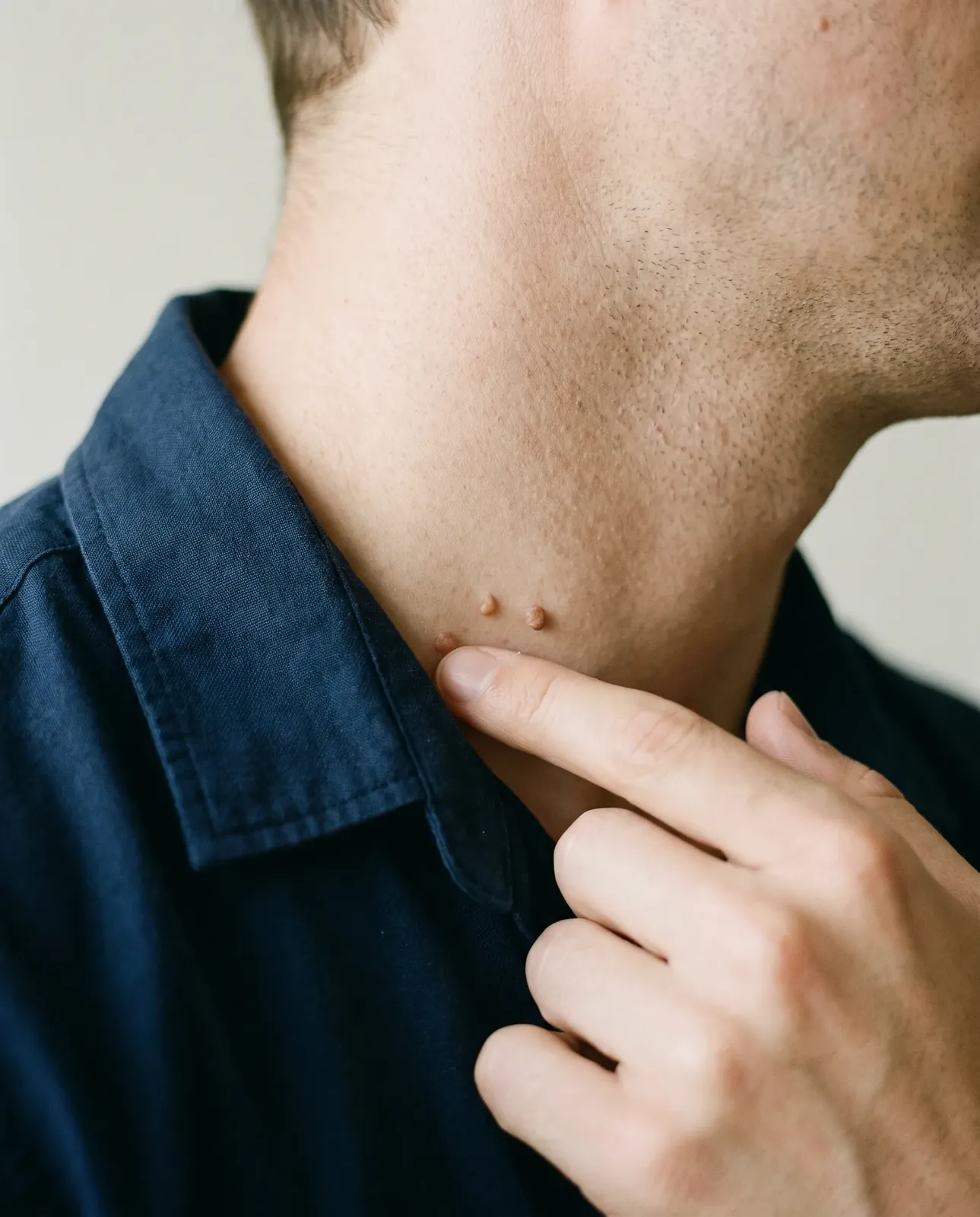
A skin tag that catches on your collar?
Skin tags are small and harmless, but the one that keeps catching on your necklace, your shirt collar or your razor stops feeling harmless quite quickly.
Many of our patients have lived with the same tag for years before deciding the simplest thing is just to have it gone.
At our private clinic in Wirral we assess and, where suitable, remove skin tags (medical name acrochordon) in a single short visit under local anaesthetic. The technique is matched to the size and site of each tag, whether that is around the neck, eyelids, underarms, under the breasts or in the groin. We treat adults aged 18 and over after in-person assessment.
A skin tag is a small benign outgrowth of skin tissue consisting of loose collagen fibres and blood vessels covered by skin. They are typically a few millimetres in size, soft, the same colour as the surrounding skin or slightly darker, and attached by a thin pedicle.
Skin tags are more common with age, during pregnancy, and in people who experience friction in skin folds. They tend to develop over months and stay stable in appearance. They are not contagious and they do not become cancerous.
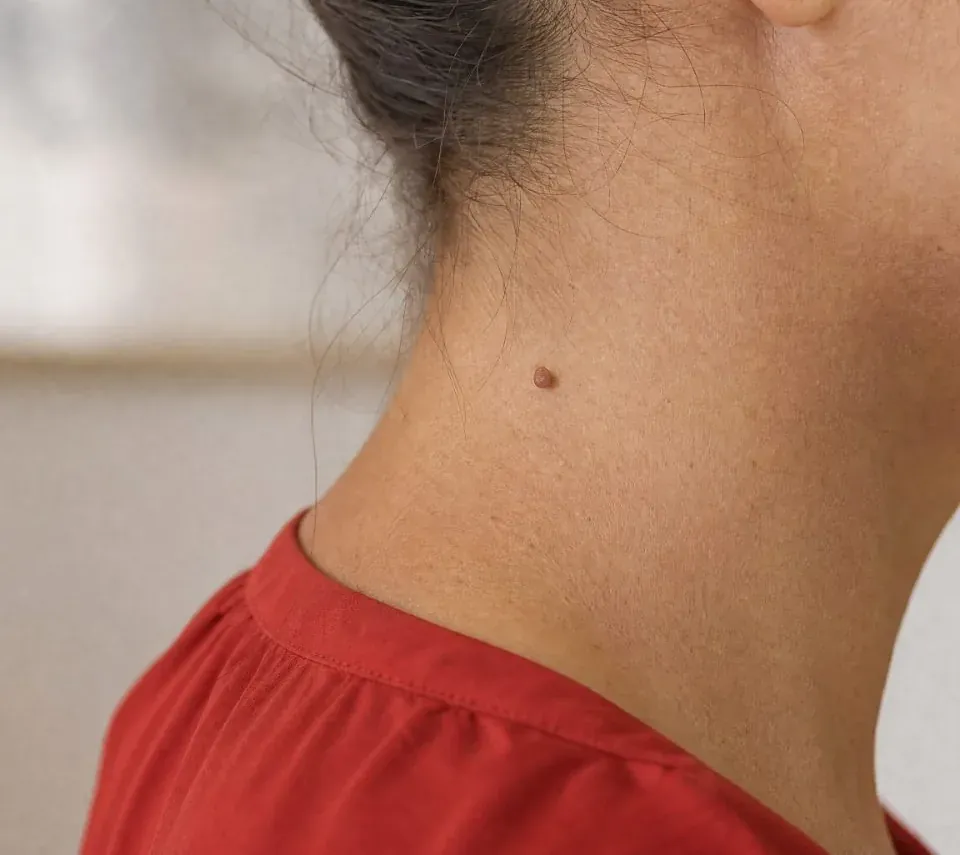
People typically choose to have skin tags removed when they:
Skin tag removal is generally not available on the NHS as the tags are benign and removal is considered a cosmetic procedure. That is why most people who want them dealt with quickly choose private treatment.
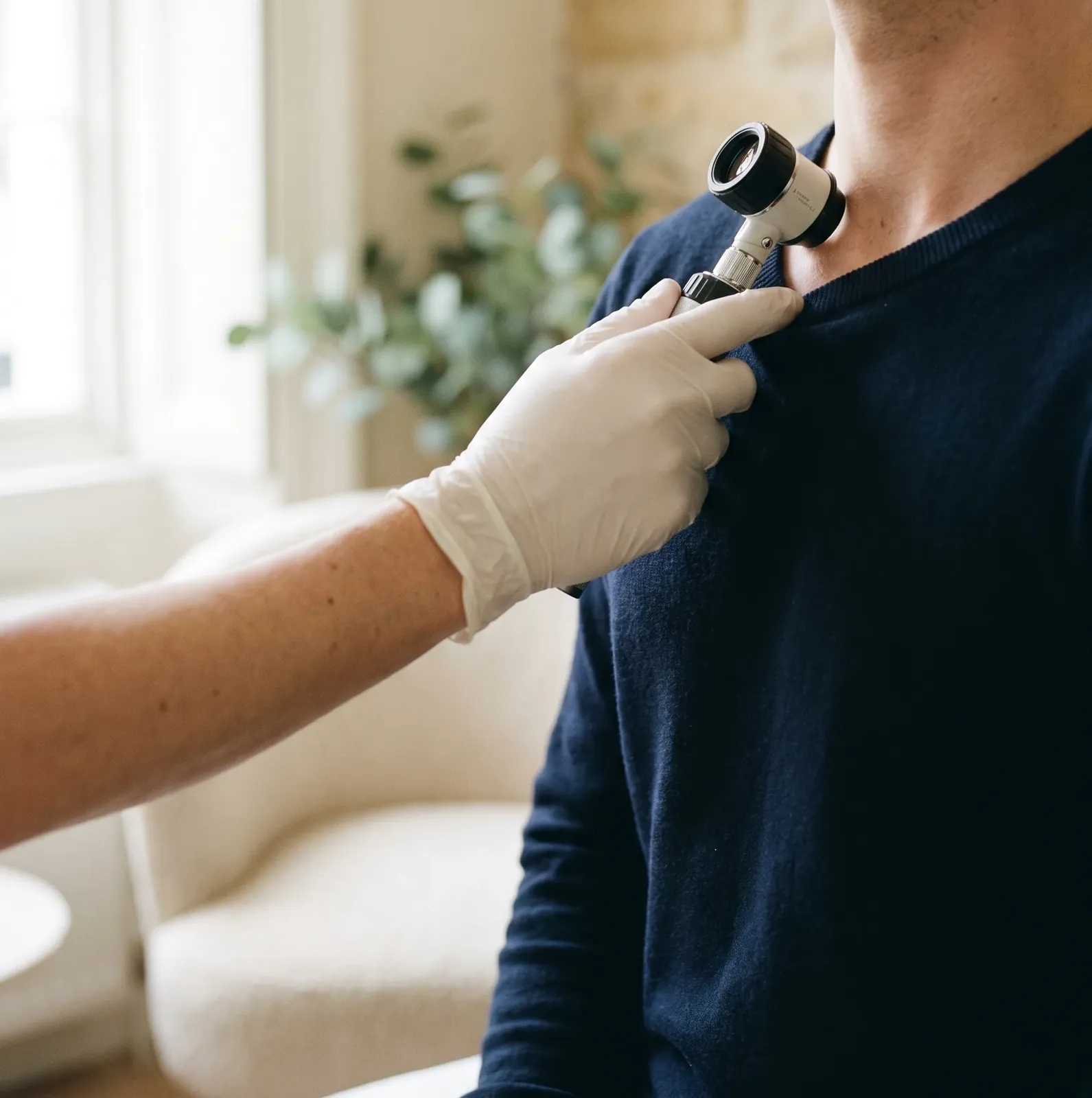
At the consultation we examine each lesion to confirm that it behaves like a typical skin tag rather than something that needs further investigation. Pigmented, irregular or bleeding-without-trauma growths are not assumed to be skin tags; they require closer review and, in some cases, NHS dermatology assessment.
We treat adults aged 18 and over. Skin tags around the eyelid margin are handled with extra care and may, in some cases, be better treated by an ophthalmic colleague. We discuss this if relevant at consultation.
A mole, wart, seborrhoeic keratosis, or other lesion can sometimes look similar to a skin tag. That is why the first step is always an in-person look.
Read: safe, doctor-led skin tag removal →The technique chosen depends on the size and location of the tag. Common methods used at the clinic include:
A short-acting local anaesthetic numbs the area, then the tag is removed at the base with sterile fine scissors. Pressure or a tiny stitch is used to control any minor bleeding.
↻ Tap to replayA small electric current is used to remove the tag and seal the small base in the same step, useful for very small tags or tags that bleed easily.
↻ Tap to replayMultiple suitable skin tags can often be addressed in the same appointment, which is more convenient than coming back for each one separately. The number that can be safely done together is decided at consultation.

Recovery from skin tag removal is usually quick. We will give you written aftercare advice covering:
Any tiny scabs typically separate on their own within a week or so.
Everyone heals at their own pace, and your written aftercare is tailored to the sites treated.
Includes consultation, the in-clinic removal of up to three tags and aftercare. Additional lesions in the same session are quoted at consultation.
I had a mole and two skin tags removed. The op went very well and I'm very happy with the result. Would recommend this clinic.
We know it can feel difficult to book a procedure when you are not sure what will happen next. Your clinician will explain suitability, risks, recovery and aftercare before treatment goes ahead.
Choose a consultation online or speak to the clinic if you are not sure which service fits. Most appointments are available within seven days.
An in-person review with Dr Mugerwa: he will listen to your story and examine the area, which may include an ultrasound scan. You then get an honest recommendation — if treatment is suitable we explain the options, risks and likely outcomes; if it is not, we will tell you and refer you on.
The procedure itself, followed by tailored aftercare guidance and a clear contact route if anything changes during recovery.
Skin tag removal is generally well tolerated, but no procedure is risk-free. We will discuss the relevant risks for your specific sites at consultation. These include:
Please see your NHS GP before booking removal if a "tag" is:
These features can indicate something other than a benign skin tag and need NHS dermatology evaluation rather than cosmetic removal.
Quick answers to the questions patients ask most before booking.
We use local anaesthetic for snip excision so the site is numbed during the procedure. You may feel a brief pinch as the anaesthetic is injected. Discomfort after treatment is usually mild and short-lived.
It depends on the size and location of the tags and the total amount of local anaesthetic that is safe to use. We confirm a treatment plan at your consultation, and many people have several tags removed in a single appointment.
An individual skin tag does not usually grow back at exactly the same point once fully removed at the base. However, new tags can develop nearby, particularly in skin folds and friction zones.
We strongly advise against home removal methods such as tying off, freezing kits or scissors. These can cause bleeding, infection, scarring, and you cannot be sure the lesion is a simple skin tag. A short clinical visit is safer and more predictable.
Fees depend on how many tags are treated and the technique used. See the pricing page for current rates.
Our private clinic in Higher Bebington, Wirral serves patients from across Merseyside, including Liverpool, Birkenhead, Heswall and Chester. We examine the lesion in person before discussing whether removal is the right choice for you.
Private removal of suitable benign moles, following clinical assessment to confirm a non-cancerous lesion.
→ 02Surgical removal of suitable epidermoid (sebaceous) cysts under local anaesthetic, performed in our surgical suite.
→ 03Surgical excision of suitable subcutaneous lipomas (benign fatty lumps) following clinical review.
→ 04Treatment of suitable seborrhoeic keratoses, common benign 'stuck-on' lesions often seen with age.
→