

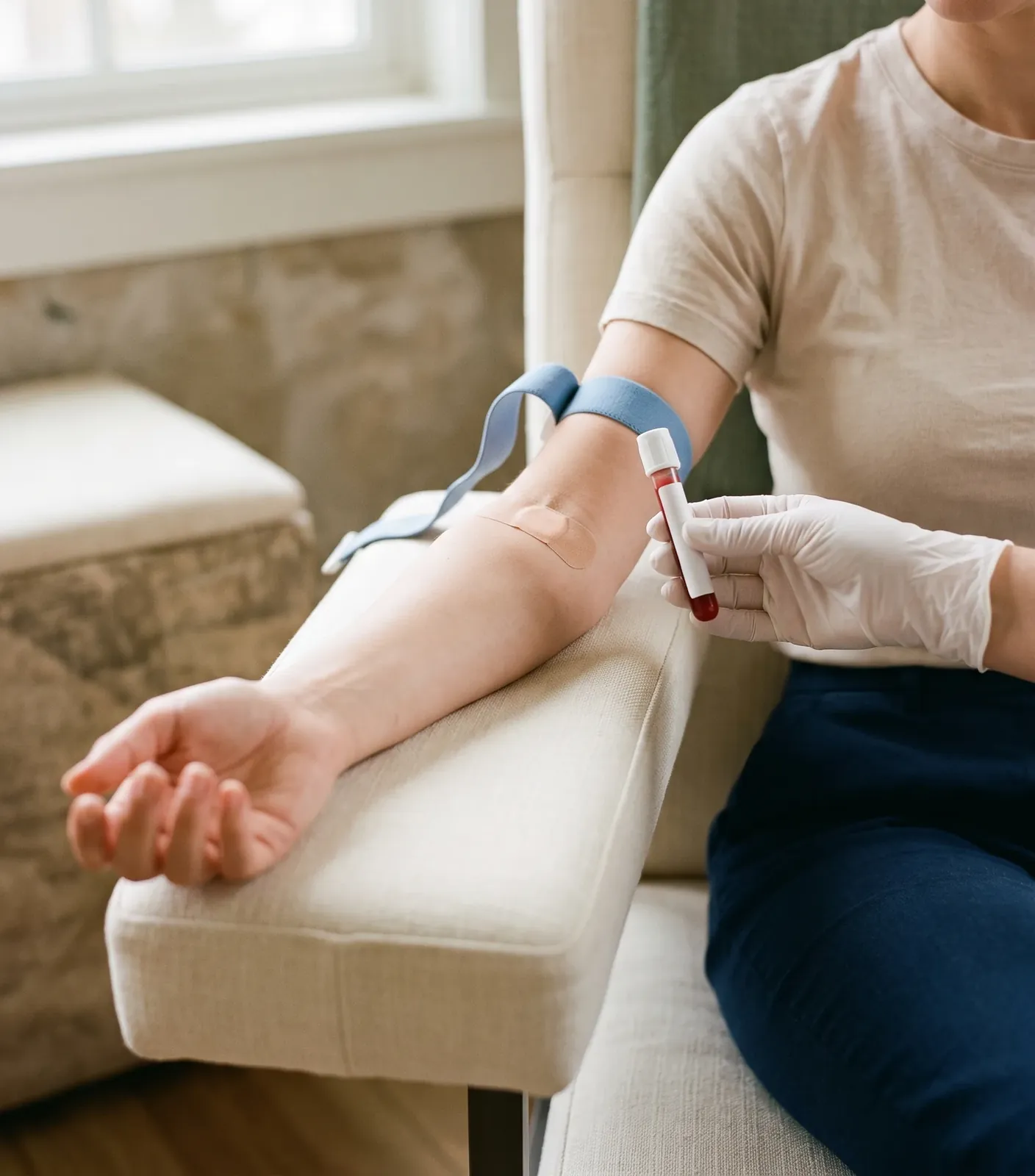
A small blood draw.
A small blood sample is taken from your arm, just as it would be for a routine blood test. The process is quick and well tolerated by most patients.
A blood-derived injection from your own sample, considered for selected tendon and joint problems after assessment.
No obligation · GP-led assessment first · Not ready to book? Meet Dr Mugerwa →

Tendon pain that keeps coming back?
Platelet Rich Fibrin, or PRF, is a regenerative injection prepared from a small sample of your own blood. It concentrates the platelets and growth factors that your body naturally uses to repair tissue, then delivers them directly into the area causing pain. For patients with stubborn tendon problems, soft-tissue injuries or early to moderate osteoarthritis, PRF can be a considered next step when rest, exercise or medication have not provided the relief you were hoping for.
Unlike steroid or hyaluronic acid injections, which deliver an external substance into the joint, PRF uses what your body already produces.
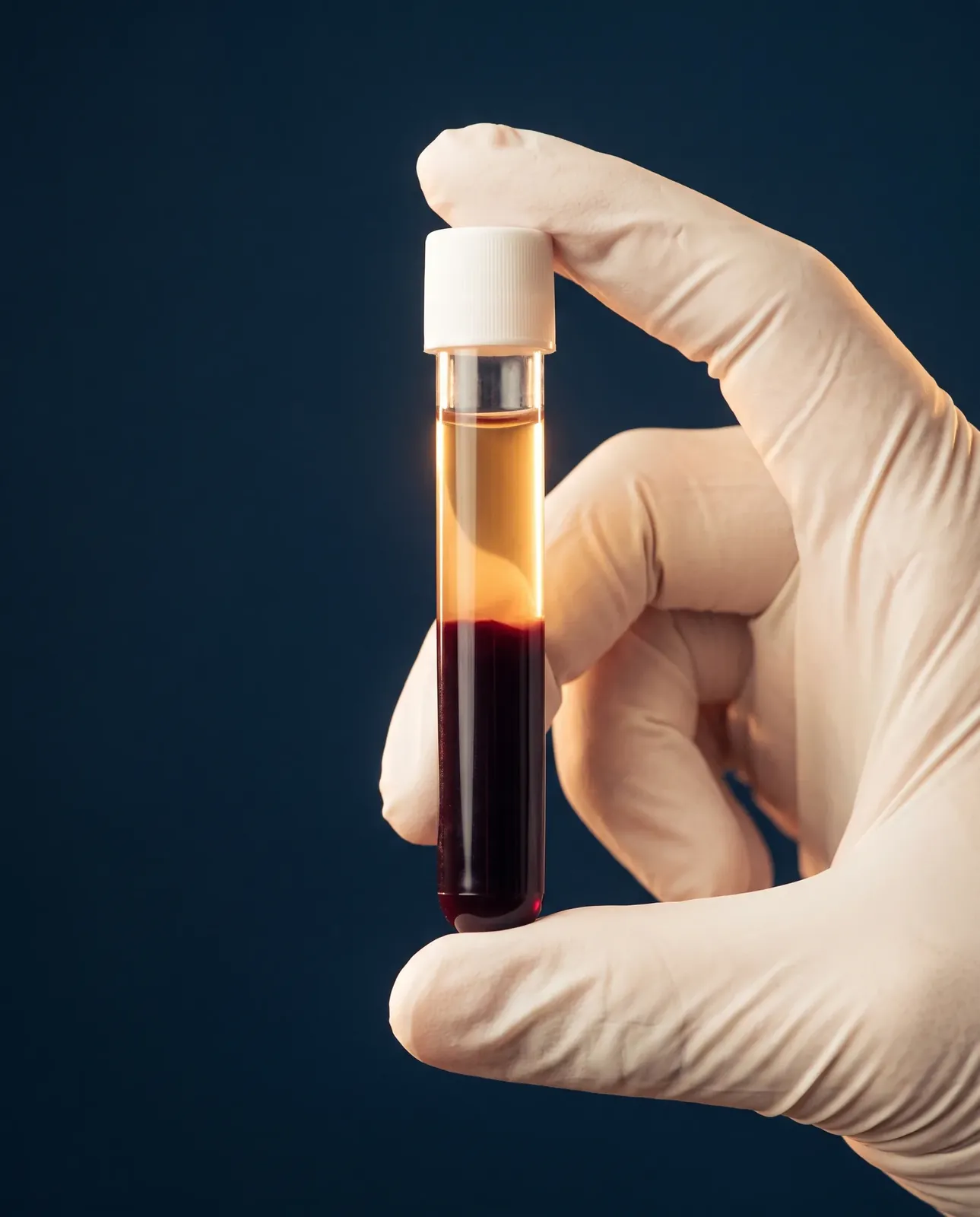
Your own blood, concentrated.
From £400 · anterior hip £600
Joint and soft-tissue pain rarely shows up cleanly on a scan or in a single diagnosis. What matters more is how it shapes your day, the walks you cut short, the sleep you lose, the exercise you start to avoid, the loss of confidence in a knee, shoulder or tendon that used to feel reliable.
Most patients we see for PRF have already worked through the usual route: rest, anti-inflammatory tablets, physiotherapy, sometimes a steroid injection. That history is genuinely useful. It tells us which structures have settled, which have not, and whether PRF is a sensible next step or whether something else fits your case better.
When PRF is unlikely to help your particular pattern of pain, we will say so plainly. We will talk through the alternatives, including targeted rehabilitation, a steroid injection, hyaluronic acid options, or — for knee osteoarthritis specifically — Arthrosamid, further imaging, GP review or onward referral.
From arrival to leaving, a typical PRF appointment takes around 45 minutes. A small blood sample is drawn from your arm while your clinician reviews the diagnosis, the target area on ultrasound and what to expect afterwards.
A small blood sample is taken from your arm, just as it would be for a routine blood test. The process is quick and well tolerated by most patients.
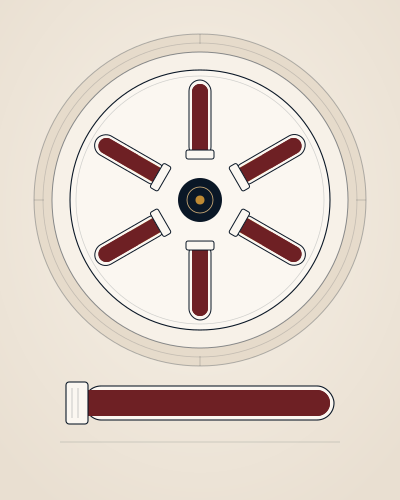
The sample is processed in a centrifuge to concentrate the platelets and growth factors into a fibrin matrix ready for injection.
PRF uses a lower-speed spin with no additives.
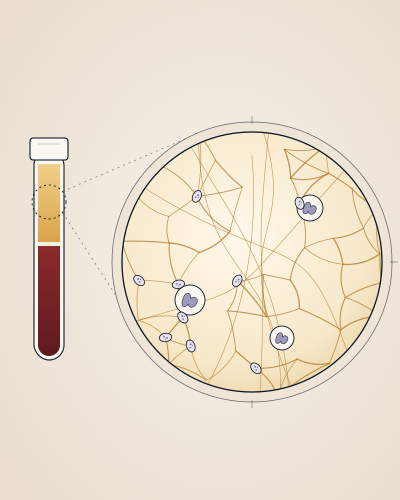
The spin separates your sample into layers. The golden upper layer is the PRF: a fibrin matrix rich in platelets and the growth factors involved in natural tissue repair.
The lower-speed spin, with no additives, preserves a higher proportion of white blood cells and creates a natural fibrin matrix that releases growth factors more gradually.
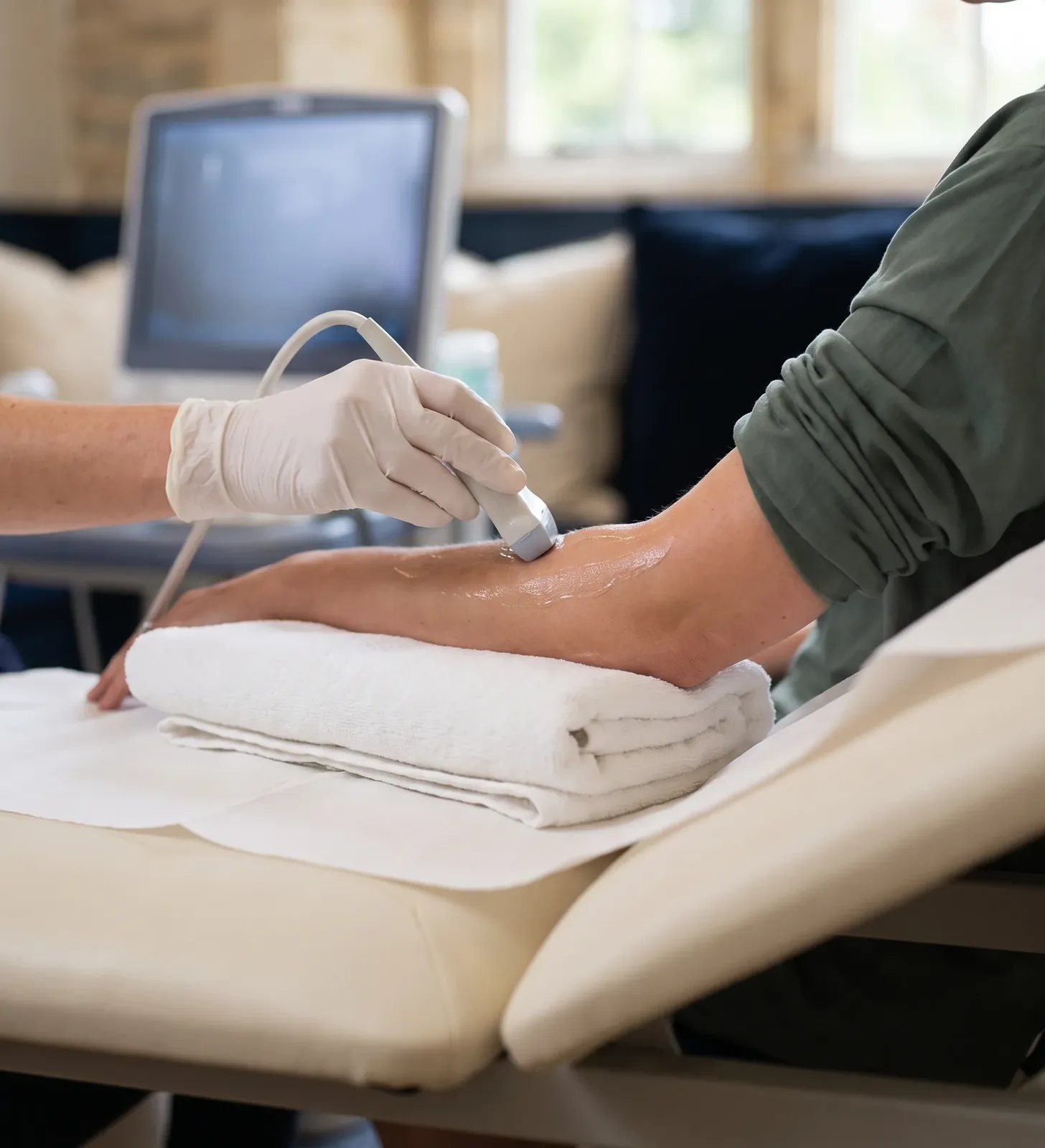
The PRF preparation is injected precisely into the target tissue, with ultrasound guidance where appropriate to support accurate placement.
Written aftercare guidance is provided before you leave.

PRF works with your body's own healing processes, so the response is gradual rather than instant. Most patients begin to notice change over the first four to six weeks following treatment, with continued improvement reported over the following months.
Those weeks are when a progressive loading programme matters most: exercises that ask a little more of the tendon, step by step, to help it adapt and grow stronger.
Healing & loading · below →A small sample of your blood is processed in a centrifuge to isolate a fibrin matrix rich in platelets and the growth factors involved in natural tissue repair. That preparation is then placed precisely into the joint or soft-tissue area identified during your assessment. The aim is to support healing locally rather than only to mask pain.
PRF aims to support the body's own repair response in tendons and joints rather than only suppressing inflammation, working with your biology instead of overriding it.
Because nothing synthetic is added, the risk of allergic reaction is very low. Other procedural risks are explained in detail before any treatment goes ahead.
PRF works best alongside rehabilitation and follow-up. Some patients report meaningful improvement; others do not respond, and we are upfront about that from the first visit.
Both are blood-derived regenerative treatments, but PRF and PRP are processed differently.
| Feature | PRF · platelet-rich fibrin | PRP · platelet-rich plasma |
|---|---|---|
| Made from | A small sample of your own blood | A sample of your own blood |
| The spin | A lower-speed spin with no additives | Higher centrifuge speeds, usually with chemical anticoagulants |
| What forms | A natural fibrin matrix that releases growth factors more gradually, preserving a higher proportion of white blood cells | Platelets concentrated within plasma |
| The evidence | PRF-specific evidence is more limited and needs careful interpretation | Much of the better-known research is on platelet-based or PRP-style treatment |
| Which suits you | In practice, the choice depends on the diagnosis and the structure being treated; we will explain which approach fits your case. | |
Platelet-based treatments have evidence in some areas, but it is not uniform across every condition or preparation method. We will tell you plainly what is and isn't known for your diagnosis.
Read: PRF vs PRP, the difference →PRF is generally most useful where blood flow to the affected tissue is naturally limited — stubborn tendinopathies and early-to-moderate joint changes. The diagnoses below are the ones we most often see in clinic. Suitability is decided after a full musculoskeletal assessment.
Hover or tap a point on the circle to read about each condition.
Tennis elbow · Golfer's elbow · Achilles tendinopathy · Patellar tendinopathy · Rotator cuff tendinopathy
Plantar fasciitis · Early-to-moderate osteoarthritis · Selected sports and overuse injuries
For a stubborn tendon, the injection is only part of the story. PRF aims to support the repair response; a progressive loading programme helps the healing tendon adapt and get stronger.
PRF aims to support the body's own repair response rather than only suppressing inflammation, so pain tends to ease gradually, over weeks rather than days.
Tendons respond to load. Your programme, such as calf raises for the Achilles or wrist and grip work for the elbow, starts gently and asks a little more of the tendon, week by week.
Stairs and walks, a firm grip, a comfortable run, a full night's sleep. Progress is reviewed as you go, and responses vary.
The response is gradual rather than instant.
This is one of the key differences from a steroid injection, which suppresses inflammation more quickly but does not directly support tissue healing.Timings vary from person to person. We discuss what is realistic for your diagnosis at your consultation.
Because PRF is prepared from a small sample of your own blood, with no synthetic additives or foreign drugs, the risk of allergic reaction or rejection is very low. We use sterile technique and ultrasound guidance where appropriate to support safe, accurate placement.
If pain, redness, heat or swelling keeps getting worse rather than settling, or you develop a fever or feel unwell, contact the clinic straight away or seek urgent medical advice. These can be signs of infection.
Other procedural risks are explained in detail before any treatment goes ahead.
After two PRP injections my knee has vastly improved, it's not back to normal but I'm fully confident that it will be soon. The injection is totally pain free, and Dr. Mugerwa explained fully the procedure. Well worth the money.
Includes consultation, the blood draw, the PRF preparation, the injection itself and aftercare advice. Anterior hip PRF is £600.
We know it can feel difficult to book a procedure when you are not sure what will happen next. Your clinician will explain suitability, risks, recovery and aftercare before treatment goes ahead.
Choose a consultation online or speak to the clinic if you are not sure which service fits. Most appointments are available within seven days.
An in-person review with Dr Mugerwa: he will listen to your story and examine the area, which may include an ultrasound scan. You then get an honest recommendation — if treatment is suitable we explain the options, risks and likely outcomes; if it is not, we will tell you and refer you on.
The procedure itself, followed by tailored aftercare guidance and a clear contact route if anything changes during recovery.
Honest answers to the questions patients most often raise about PRF — how it differs from PRP, how many sessions to expect, and what conditions it suits best.
Because PRF is prepared from a small sample of your own blood, with no synthetic additives or foreign drugs, the risk of allergic reaction or rejection is very low. As with any injection, there is a small risk of bruising, infection or short-lived pain at the injection site, which we discuss with you before treatment. We use sterile technique and ultrasound guidance where appropriate to support safe, accurate placement.
Some patients notice meaningful improvement after a single session, but clinical experience generally favours a course of two to three treatments spaced four to six weeks apart for tendon and joint conditions. A staged approach allows the regenerative response to build over successive sessions. We agree the likely number of sessions with you at consultation, and review progress as we go rather than committing to a fixed course up front.
Both are blood-derived regenerative treatments, but PRF and PRP are processed differently. PRP is prepared at higher centrifuge speeds and usually involves chemical anticoagulants; PRF uses a lower-speed spin with no additives, which preserves a higher proportion of white blood cells and creates a natural fibrin matrix that releases growth factors more gradually. In practice, the choice depends on the diagnosis and the structure being treated; we will explain which approach fits your case.
PRF is most commonly considered for chronic tendon problems (tennis elbow, golfer's elbow, Achilles tendinopathy, patellar tendinopathy, rotator cuff tendinopathy and plantar fasciitis) and for early to moderate osteoarthritis where a regenerative, non-steroid approach is preferred. It is not suitable for every painful joint or tendon. Suitability is decided at consultation.
PRF works with your body's own healing processes, so the response is gradual rather than instant. Most patients begin to notice change over the first four to six weeks following treatment, with continued improvement reported over the following months. This is one of the key differences from a steroid injection, which suppresses inflammation more quickly but does not directly support tissue healing.
A typical PRF appointment takes around 45 minutes. A small blood sample is drawn from your arm — similar to a routine blood test — and immediately processed in our centrifuge to separate the PRF matrix. The prepared injection is then placed precisely into the target tissue under ultrasound guidance. Written aftercare guidance is provided before you leave.
PRF for musculoskeletal conditions is currently a privately-funded treatment in the UK. The Skin & Joint Injection Clinic is an independent, CQC-registered private clinic; you can refer yourself directly. The fee includes consultation, the blood draw, PRF preparation, the ultrasound-guided injection and aftercare advice.
No questions match that search. Try another word, or ask us directly.
Book a GP-led assessment. If PRF suits your diagnosis, we'll explain what to expect and the loading that goes with it; if it doesn't, we'll say so plainly.
Useful next steps if you are comparing treatment options at our Wirral clinic.
See how steroid, hyaluronic acid, Arthrosamid and PRF options are selected.
→ 02Short-term anti-inflammatory injections for suitable joints, tendons and bursae.
→ 03Hyaluronic acid injection information for knee osteoarthritis and selected joints.
→ 04A hydrogel injection option for suitable patients with knee osteoarthritis.
→