

If you are comparing PRF and PRP, you are probably trying to cut through a lot of mixed messaging. One clinic says "natural healing". Another says "advanced regenerative medicine". Meanwhile you are left wondering what the actual difference is, whether either option may suit your problem, and how much uncertainty you are being asked to accept. That is the real question, and it deserves a clear answer.
PRF and PRP are both blood-derived treatments made from your own sample, but they are processed differently and should not be treated as interchangeable shortcuts to the same result. At Skin and Joint Injection Clinic, the aim is to help patients make sense of where these treatments may fit, where the evidence is thinner, and when another option may be more sensible.
Quick answer: what is the difference?
PRP usually refers to platelet-rich plasma, a blood-derived treatment prepared to concentrate platelets within plasma. PRF usually refers to platelet-rich fibrin, which forms a fibrin matrix and releases growth factors differently over time. Both come from your own blood, but they are not identical products and should not be described as though they behave in exactly the same way.
Why people compare PRF and PRP
People usually compare PRF and PRP when they feel stuck between standard options and marketing claims. Some want to stay active without rushing towards surgery. Some are exploring skin-focused treatment and want something more grounded than beauty-industry hype. Others simply want to know whether a biologic treatment is genuinely worth considering or whether it is being oversold.
That is why the conversation needs more than a label. It needs context, evidence, and honesty about what is still uncertain.
What PRP is, in plain English
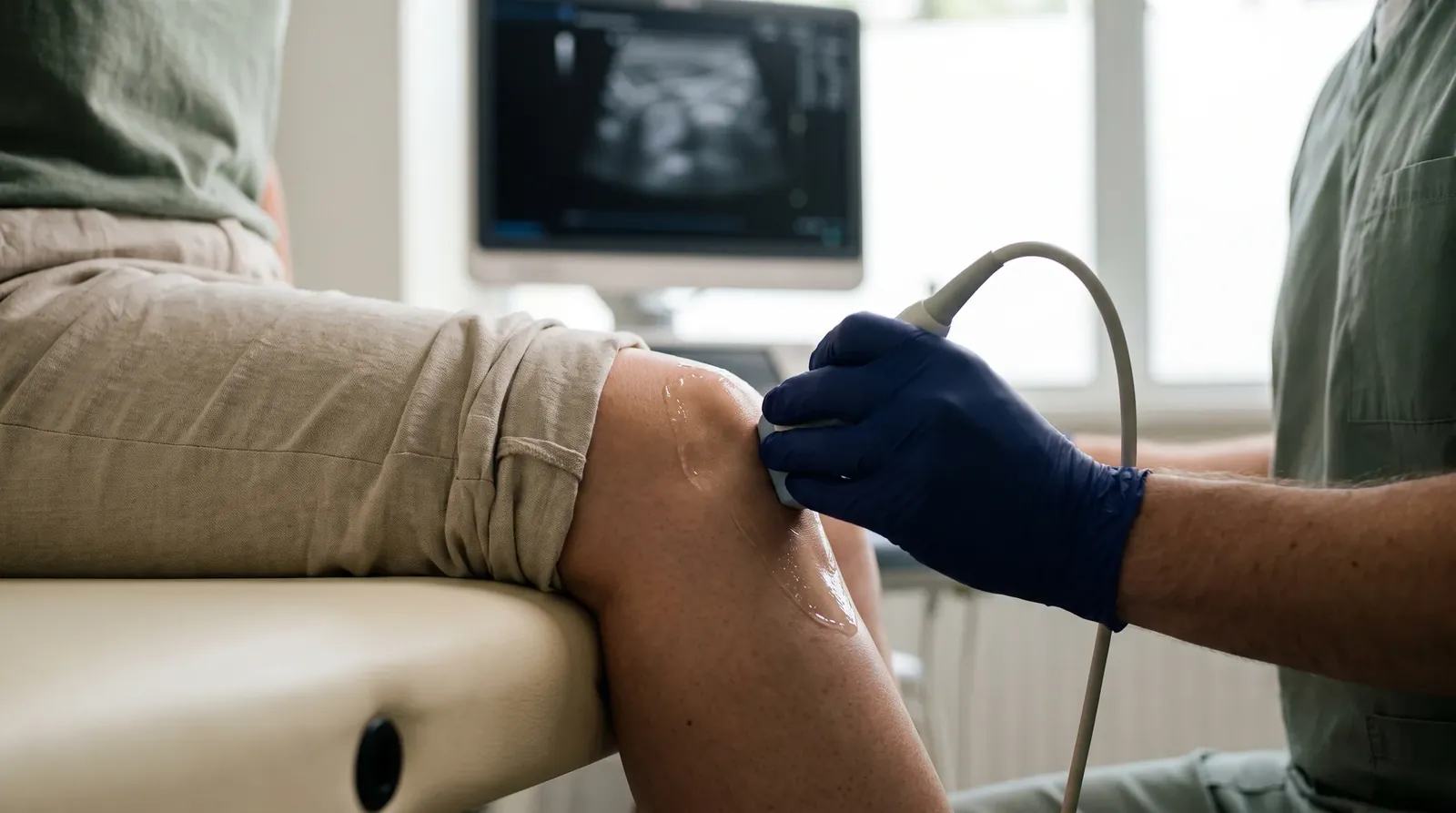
PRP is made by taking a blood sample and processing it to concentrate platelets. Platelets contain growth factors that may support tissue signalling and healing responses. In musculoskeletal care, PRP-style treatments are discussed for selected tendon problems and knee osteoarthritis. In skin-focused care, platelet-based treatments may also be considered for selected concerns.
The important point is that evidence for platelet-based injections exists in some areas, but it is not uniform across every condition, every preparation method, or every clinic protocol. So broad claims such as "PRP works for everything" should be treated cautiously.
What PRF is, in plain English
PRF is also derived from your own blood, but it is prepared differently to create a fibrin-rich matrix. That changes how the product behaves and how growth factors may be released over time.
PRF is often discussed in skin and soft tissue contexts, and it may also appear in broader regenerative treatment conversations. The key point here is balance. PRF is interesting, but interest is not the same as strong evidence. The published PRF-specific percentage evidence is more limited than for hyaluronic acid or Arthrosamid, and even within platelet-based treatment literature the study quality and preparation methods vary.
Is PRF better than PRP?
There is no universal answer. "Better" depends on the tissue being treated, the goal of treatment, and the evidence for that exact use.
Useful questions include:
- are we treating a joint, tendon, scar, or skin concern?
- what level of evidence exists for this indication?
- is the realistic goal symptom relief, healing support, or skin-quality improvement?
- is a biologic treatment actually more appropriate than steroid, hyaluronic acid, minor surgery, or no procedure at all?
If a clinic tells you one is simply "better" without context, that is a sign the conversation may be too simplistic.
What does the evidence suggest for joints?
For selected knee osteoarthritis patients, platelet-based injection studies have reported responder rates in the region of roughly 56-61% at 6 months in some settings. That is useful evidence in plain English, but it should still be treated as study data rather than a forecast for any one patient.
What matters most is clarity about what the evidence actually covers. Much of the better-known research is on platelet-based or PRP-style treatment, not necessarily PRF prepared in every possible way. So if PRF is being suggested for a joint problem, the discussion should acknowledge that the evidence is still more limited and needs careful interpretation.
What about skin-focused treatment?
Patients exploring PRF for skin are often interested in texture, healing support, or a more natural-feeling regenerative approach. That can be a reasonable discussion, but expectations still need to stay grounded. Skin changes gradually. Improvement is not instant or guaranteed, and depending on the concern, more than one session may be needed.
What does treatment feel like?
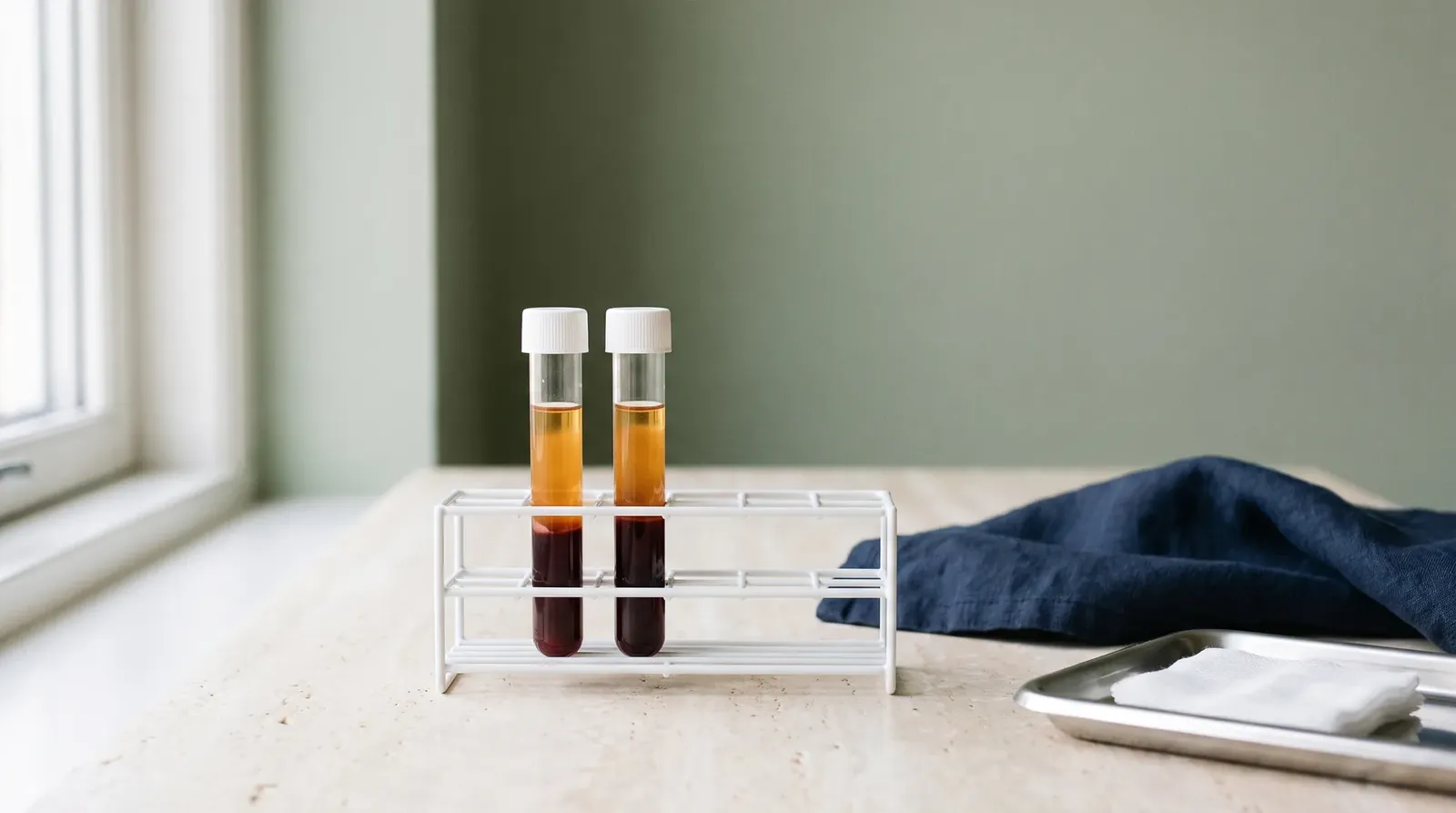
Both PRF and PRP start with a blood sample. The treatment is then prepared and applied or injected depending on the area being treated. Discomfort varies with the site and the technique used. Temporary soreness, bruising, or swelling can happen. Infection and bleeding are uncommon but important risks with any injection-based procedure.
Why assessment matters more than trend-driven marketing
A biologic treatment only makes sense if the underlying diagnosis is right. Knee pain is not one single problem. Skin concerns are not one single problem either. Some patients are better served by rehabilitation, steroid for an inflammatory flare, hyaluronic acid for selected osteoarthritis, minor surgery for a skin lesion, or simply more conservative management first.
This is where patients often feel relieved by a proper consultation. Instead of being funnelled towards a fashionable label, you get help deciding whether a biologic treatment genuinely belongs in the plan at all.
What makes a responsible PRF or PRP discussion?
A responsible consultation should cover:
- what the treatment is and how it differs from alternatives
- what evidence supports the exact use being discussed
- what remains uncertain
- how long response may take
- how many sessions may be needed
- the practical costs and recovery expectations
- what other options may be more suitable
That kind of conversation helps patients feel informed rather than persuaded. It protects against overclaiming and makes it easier to choose on substance rather than hype.
When should you book?
If you are comparing PRF and PRP for a joint or skin concern and want grounded advice rather than sales language, the next sensible step is a proper assessment.